How Hydraulic Vane Pumps Are Used in Industrial Applications
May 1, 2023
Hydraulic vane pumps play a critical role in powering modern industrial machinery across the United States and Canada. Known for their smooth operation, consistent flow, and energy efficiency, these pumps are widely used in manufacturing plants, material handling systems, automotive production lines, and heavy equipment operations.
From factory automation to precision machine tools, hydraulic vane pumps provide reliable hydraulic power where stable pressure and low noise levels are essential. In this guide, we’ll explore how hydraulic vane pumps work, their types, advantages, real-world industrial applications, and how to choose the right pump for your system.
Introduction to Hydraulic Vane Pumps
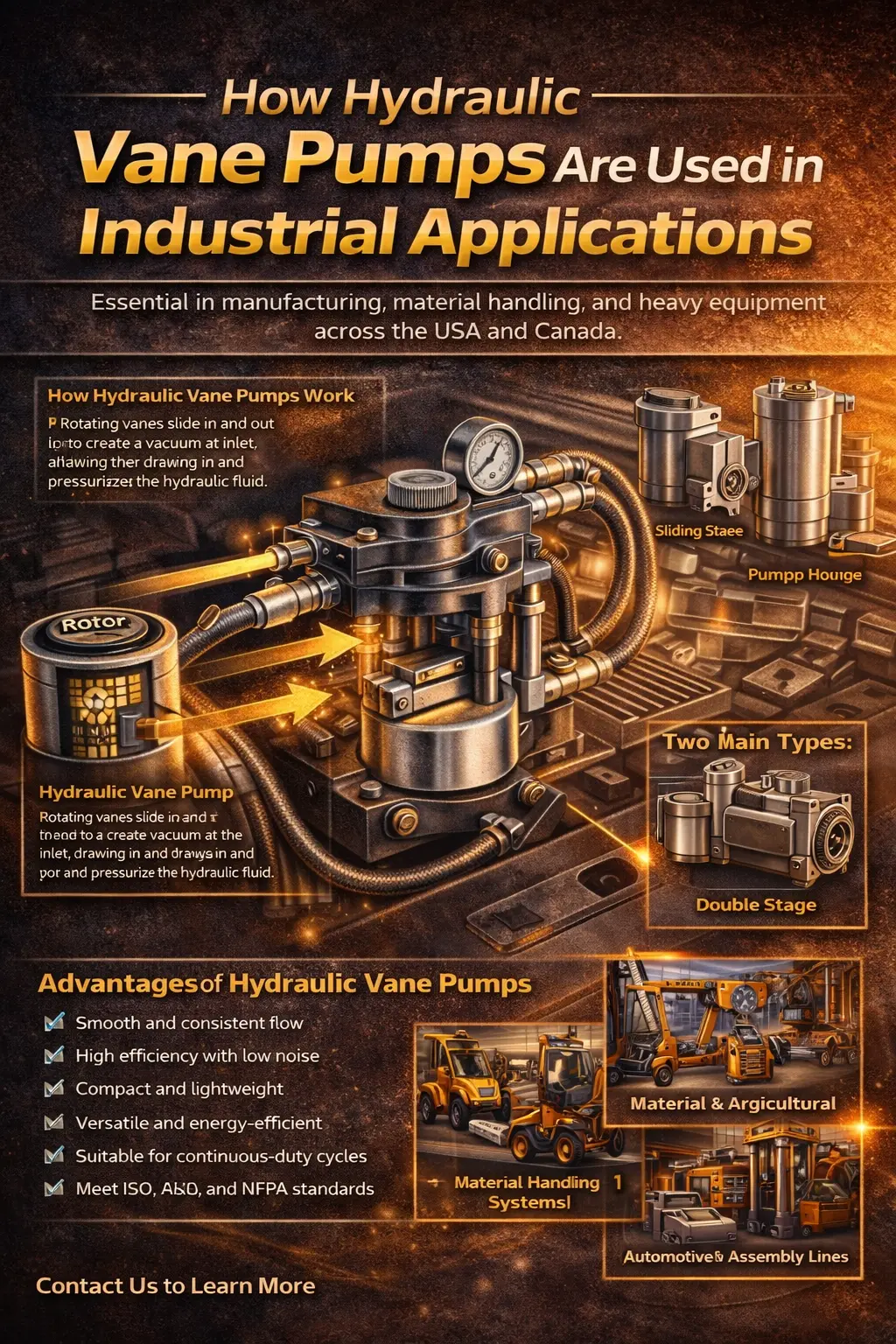
Hydraulic vane pumps are positive displacement hydraulic pumps designed to move fluid using rotating vanes mounted inside a slotted rotor. As the rotor spins, the vanes slide in and out, creating sealed chambers that draw in and pressurize hydraulic fluid.
Unlike gear pumps, vane pumps deliver a smoother and quieter flow, making them ideal for industrial environments where precision and noise control matter.
These pumps are commonly used in industries such as:
- Manufacturing & factory automation
- Automotive assembly plants
- Construction & agricultural equipment
- Plastics and injection molding
- Power generation and material handling
How Hydraulic Vane Pumps Work
The working principle of a hydraulic vane pump is simple yet highly efficient.
Step-by-Step Working Process:
- A motor drives the rotor inside the pump housing
- Vanes slide outward due to centrifugal force
- Expanding chambers create vacuum at the inlet
- Hydraulic fluid is drawn into the pump
- As chambers shrink, fluid is pressurized and discharged
This design ensures:
- Continuous flow
- Minimal pressure fluctuations
- Reduced heat generation
Because of this smooth operation, vane pumps are preferred in industrial hydraulic systems requiring consistent performance.
Types of Hydraulic Vane Pumps
1. Single-Stage Hydraulic Vane Pumps
- One pumping section
- Suitable for moderate pressure applications
- Common in machine tools and conveyors
2. Double-Stage (Two-Stage) Vane Pumps
- Two pumping sections in one housing
- Higher flow capacity
- Used in presses and industrial machinery
3. Fixed Displacement Vane Pumps
- Constant flow output
- Simple and cost-effective
- Ideal for steady-load industrial systems
4. Variable Displacement Vane Pumps
- Adjustable flow rate
- Energy-efficient
- Widely used in modern factories and CNC machines
Industrial Applications of Hydraulic Vane Pumps
Hydraulic vane pumps are used across a wide range of industrial applications in the USA and Canada.
Manufacturing & Machine Tools
- CNC machining centers
- Milling and drilling machines
- Precision automation systems
Their smooth pressure delivery ensures accuracy and repeatability.
Construction & Agricultural Equipment
- Loaders and excavators
- Tractors and harvesters
- Hydraulic steering systems
Vane pumps help maintain stable hydraulic power under varying loads.
Automotive & Assembly Lines
- Robotic arms
- Hydraulic presses
- Lift systems
Low noise and efficient performance make vane pumps ideal for continuous operation.
Material Handling Systems
- Forklifts
- Conveyor systems
- Hydraulic elevators
Consistent flow improves safety and operational efficiency.
Power Generation & Energy Sector
- Turbine control systems
- Valve actuation
- Cooling systems
Vane pumps ensure reliable fluid control in critical operations.
Advantages of Hydraulic Vane Pumps
Hydraulic vane pumps offer several benefits that make them popular in industrial hydraulic systems:
- Smooth and quiet operation
- High volumetric efficiency
- Compact and lightweight design
- Stable flow output
- Lower energy consumption
- Suitable for continuous-duty cycles
These advantages help reduce downtime and operating costs in industrial environments.
Disadvantages of Hydraulic Vane Pumps
While highly efficient, vane pumps do have limitations:
- Sensitive to fluid contamination
- Require clean hydraulic oil
- Not ideal for extremely high-pressure applications
- Higher initial cost than gear pumps
Using proper hydraulic filtration systems significantly improves pump life and performance.
Key Components in Industrial Hydraulic Systems
A typical hydraulic system includes:
- Hydraulic vane pump
- Electric motor or engine
- Hydraulic filters (suction, return, pressure)
- Control valves
- Hydraulic cylinders or motors
- Reservoir and cooling system
Each component must be properly matched to ensure optimal system performance.
How to Choose the Right Hydraulic Vane Pump
When selecting a vane pump for industrial use, consider:
Operating Pressure & Flow Rate
Match pump capacity to system demand.
Fluid Compatibility
Ensure compatibility with mineral oils or synthetic hydraulic fluids.
Noise Requirements
Critical for indoor manufacturing plants.
Filtration Level
Clean oil extends pump lifespan and improves efficiency.
Industry Standards
Choose pumps compliant with ISO, ANSI, and NFPA standards common in North America.
Maintenance Tips for Longer Pump Life
- Use high-quality hydraulic oil
- Replace filters regularly
- Monitor oil cleanliness levels
- Check vane wear periodically
- Maintain proper operating temperature
Preventive maintenance reduces unexpected breakdowns and extends service life.
Why Hydraulic Vane Pumps Are Ideal for Modern Industries
Hydraulic vane pumps strike the perfect balance between efficiency, reliability, and cost. Their ability to deliver consistent flow with minimal noise makes them ideal for today’s advanced industrial applications.
With increasing automation across industries in the United States and Canada, vane pumps continue to be a preferred choice for engineers and plant managers.
Conclusion
Hydraulic vane pumps are a vital component in industrial hydraulic systems, offering smooth operation, high efficiency, and dependable performance. From manufacturing plants to heavy equipment and power generation, these pumps help drive productivity and operational reliability.
By choosing the right hydraulic vane pump and maintaining proper filtration, industries can significantly reduce downtime, lower energy costs, and extend equipment lifespan.
If you’re looking to improve hydraulic system efficiency, hydraulic vane pumps remain a smart and proven solution for industrial applications.
FAQs
What is a hydraulic vane pump used for?
Hydraulic vane pumps are used to supply pressurized hydraulic fluid in industrial machinery, manufacturing equipment, construction machines, and material handling systems.
Are hydraulic vane pumps suitable for continuous operation?
Yes, vane pumps are designed for continuous-duty industrial applications when used with clean hydraulic oil and proper filtration.
How efficient are hydraulic vane pumps?
Hydraulic vane pumps offer high volumetric efficiency and low energy loss, making them suitable for energy-efficient industrial systems.
Do hydraulic vane pumps require filtration?
Yes, proper hydraulic filtration is essential to prevent vane wear and ensure long pump life.

