High Pressure Hydraulic Filters for Industrial Equipment Protection
May 20, 2026
Hydraulic systems are essential for powering industrial machinery across the United States and Canada. Industries such as construction, mining, agriculture, manufacturing, forestry, transportation, and oil and gas depend heavily on hydraulic equipment to maintain daily operations. These systems operate under extreme pressure and demanding conditions, making proper filtration one of the most important factors in maintaining equipment performance and reliability.
One small contamination issue inside a hydraulic system can quickly lead to major operational problems. Dirt, metal particles, water, sludge, and airborne contaminants can damage pumps, valves, cylinders, and motors. Over time, contamination causes equipment wear, reduced efficiency, expensive repairs, and unexpected downtime.
This is where a High Pressure Filter plays a critical role. A high pressure hydraulic filter helps maintain clean hydraulic fluid, protects sensitive components, and ensures smooth equipment operation even in harsh industrial environments.
In this blog, we will explore how high pressure hydraulic filters work, why they are important, and how industries in the USA and Canada benefit from reliable hydraulic filtration systems.
What Is a High Pressure Hydraulic Filter?
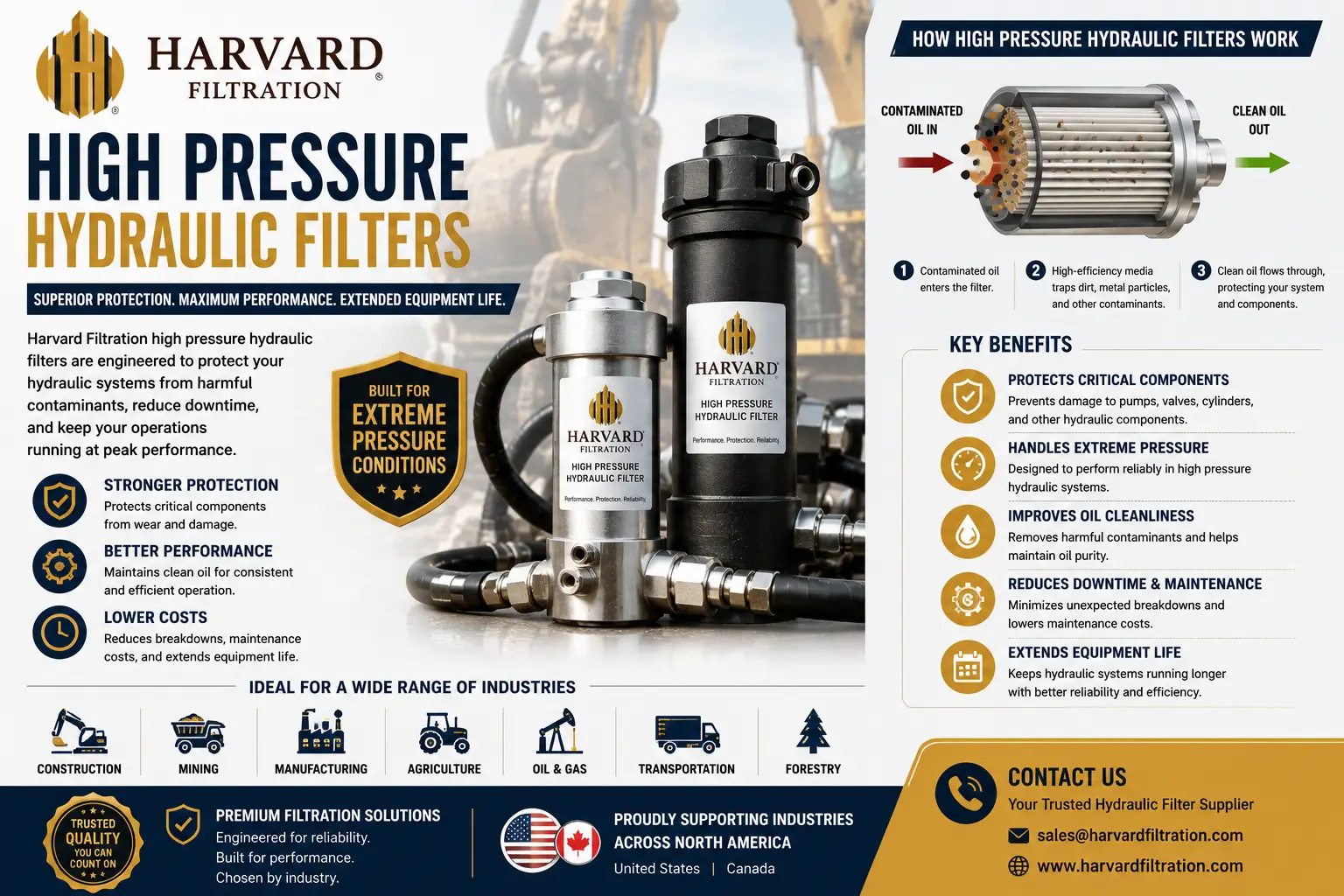
A high pressure hydraulic filter is a filtration device designed to remove contaminants from hydraulic fluid operating under high-pressure conditions. These filters are installed within hydraulic systems to protect sensitive components from harmful particles and contamination.
Hydraulic systems often operate at extremely high pressures, especially in heavy industrial equipment. Because of this, filters used in these systems must be strong enough to withstand pressure while still delivering effective filtration performance.
A high pressure hydraulic filter helps:
- Remove dirt and debris from hydraulic oil
- Protect hydraulic pumps and valves
- Maintain oil cleanliness
- Improve system efficiency
- Extend equipment lifespan
- Reduce maintenance costs
Industries across North America rely on hydraulic pressure filter systems to maintain equipment performance and reduce operational disruptions.
Why Hydraulic Filtration Is Important
Hydraulic oil contamination is one of the leading causes of hydraulic system failure. Even microscopic contaminants can cause severe damage inside hydraulic components.
Common Sources of Hydraulic Contamination
Dirt and Dust
Industrial environments often expose equipment to airborne particles and dust.
Metal Particles
Wear inside hydraulic components creates metal debris that circulates through the system.
Water Contamination
Moisture enters hydraulic reservoirs through condensation or external exposure.
Sludge and Varnish
Oil degradation creates harmful deposits that reduce system efficiency.
Without proper filtration, these contaminants can cause:
- Pump failure
- Valve damage
- Seal wear
- Reduced hydraulic performance
- Increased downtime
- Higher maintenance costs
Installing a reliable high pressure inline hydraulic filter helps eliminate these problems before they damage equipment.
How High Pressure Hydraulic Filters Work
High pressure hydraulic filters are designed to capture contamination while allowing hydraulic oil to flow smoothly through the system.
Filtration Process
Step 1: Hydraulic Oil Flows Through the Filter
Contaminated oil enters the filter housing under pressure.
Step 2: Contaminants Are Captured
The filter media traps dirt, metal particles, and other harmful contaminants.
Step 3: Clean Oil Continues Through the System
Filtered hydraulic oil moves safely through pumps, valves, cylinders, and motors.
This process helps maintain clean hydraulic fluid and protects equipment from premature wear.
Benefits of High Pressure Hydraulic Filters
Industries throughout the United States and Canada use hydraulic filtration systems because they provide several operational advantages.
1. Improved Equipment Protection
Hydraulic components are expensive and sensitive to contamination. Proper filtration protects pumps, valves, actuators, and motors from damage.
2. Reduced Downtime
Unexpected equipment failures can stop production and create costly delays. Clean hydraulic oil helps reduce breakdowns and improve reliability.
3. Longer Equipment Life
Hydraulic systems last longer when contamination is controlled effectively.
4. Lower Maintenance Costs
Replacing damaged hydraulic components is expensive. High pressure filtration systems help reduce repair and replacement costs.
5. Better System Efficiency
Clean oil allows hydraulic systems to operate more efficiently and maintain consistent performance.
6. Improved Productivity
Reliable machinery improves operational efficiency and supports continuous production.
Applications of High Pressure Hydraulic Filters
High pressure hydraulic filters are widely used across industrial sectors in the USA and Canada.
Construction Equipment
Excavators, loaders, bulldozers, and cranes rely on hydraulic systems for heavy lifting and movement.
Mining Industry
Mining operations expose hydraulic equipment to extremely dusty and demanding conditions.
Manufacturing Plants
Hydraulic machinery in production facilities requires clean oil for accurate and efficient operation.
Agriculture Equipment
Modern farming equipment depends on hydraulic systems for planting, harvesting, and material handling.
Oil and Gas Industry
Hydraulic equipment in oilfield operations operates under high pressure and harsh environments.
Forestry Equipment
Logging and forestry machinery rely heavily on hydraulic power in outdoor conditions.
What Is a High Pressure Inline Hydraulic Filter?
A high pressure inline hydraulic filter is installed directly within the hydraulic fluid line to provide continuous filtration during operation.
These filters are commonly used because they:
- Deliver efficient contamination control
- Protect downstream components
- Operate effectively under high pressure
- Improve hydraulic oil cleanliness
- Support continuous equipment operation
Inline filtration systems are especially valuable in heavy industrial applications where hydraulic reliability is critical.
Signs Your Hydraulic Filter Needs Replacement
Regular filter maintenance is essential for maintaining system performance. Ignoring filter replacement can lead to contamination buildup and equipment damage.
Common Warning Signs Include:
- Reduced hydraulic performance
- Slow machine operation
- Increased system pressure
- Unusual equipment noise
- Dirty or cloudy hydraulic oil
- Frequent overheating
- Higher fuel or energy consumption
Replacing filters at the recommended intervals helps maintain proper system protection.
Choosing the Right Hydraulic Pressure Filter
Selecting the correct hydraulic pressure filter depends on several operational factors.
Consider These Factors
Operating Pressure
Choose a filter designed for your hydraulic system’s pressure requirements.
Flow Rate
The filter must support the required hydraulic oil flow without restricting performance.
Filtration Efficiency
Higher filtration efficiency provides better contamination control.
Environmental Conditions
Dusty, humid, or harsh environments may require specialized filtration solutions.
Equipment Type
Different industrial applications may require different filter configurations.
Working with an experienced hydraulic filter supplier helps ensure you select the best filtration solution for your equipment.
Importance of Preventive Maintenance
Hydraulic filtration is only one part of an effective maintenance strategy. Preventive maintenance helps identify contamination issues before equipment failure occurs.
Best Maintenance Practices
- Monitor hydraulic oil condition regularly
- Replace filters on schedule
- Inspect hydraulic reservoirs for contamination
- Use clean oil handling procedures
- Conduct routine oil analysis
- Maintain proper fluid levels
Industrial facilities that prioritize preventive maintenance often experience lower operating costs and improved equipment reliability.
Why Hydraulic Filtration Matters in the USA and Canada
Industries across North America face demanding operating environments, including:
- Extreme weather conditions
- Dusty job sites
- Heavy workloads
- Continuous operation schedules
- High-pressure hydraulic applications
These conditions increase the risk of contamination and hydraulic system wear. Reliable filtration systems help industrial businesses reduce downtime, protect equipment investments, and maintain operational productivity.
Whether operating in construction sites in the United States or manufacturing facilities in Canada, clean hydraulic oil remains essential for efficient machinery performance.
Conclusion
High pressure hydraulic filters are critical for protecting industrial hydraulic systems from contamination and premature wear. By removing harmful particles from hydraulic oil, these filtration systems improve equipment reliability, reduce maintenance costs, and extend machinery life.
Industries across the United States and Canada continue to invest in advanced hydraulic filtration solutions to improve operational efficiency and reduce costly downtime. Whether you need a high pressure inline hydraulic filter or a complete hydraulic pressure filter system, choosing high-quality filtration products is essential for long-term equipment performance.
At Harvard Filtration, we provide reliable filtration solutions for industrial applications across North America. As a trusted Hydraulic filter supplier, we help businesses protect hydraulic systems with high-performance filtration products designed for demanding environments. Contact us today to find the right hydraulic filtration solution for your equipment needs.
FAQs
1. What does a high pressure hydraulic filter do?
A high pressure hydraulic filter removes contaminants such as dirt, metal particles, and debris from hydraulic oil to protect hydraulic components and improve system performance.
2. Why is hydraulic filtration important?
Hydraulic filtration helps prevent contamination-related damage, reduces downtime, improves equipment efficiency, and extends machinery life.
3. What is a high pressure inline hydraulic filter?
A high pressure inline hydraulic filter is installed directly in the hydraulic fluid line to provide continuous filtration during equipment operation.
4. How often should hydraulic filters be replaced?
Replacement intervals depend on equipment usage, operating conditions, and manufacturer recommendations. Regular inspections help determine the right maintenance schedule.
5. Which industries use hydraulic pressure filters?
Industries including construction, mining, manufacturing, agriculture, oil and gas, transportation, and forestry commonly use hydraulic pressure filters.
Also Read Blogs:
Right Hydraulic Replacement Filter Element Guide
How Often to Replace Filter Element
How Do Manufacturers Produce Hydraulic Filter Elements?
Importance of Filter Elements in Hydraulic Systems

