Understand the Types of Oil Filtration | Harvard Filtration
August 29, 2022
In today’s industrial environment, equipment reliability is directly linked to the quality of its lubrication system. Whether you’re operating hydraulic presses in Ohio, manufacturing equipment in Michigan, mining machinery in Nevada, or construction equipment in Texas, clean oil is essential for maximizing performance and minimizing downtime. Contaminated oil is one of the leading causes of hydraulic system failures. Dirt, metal particles, water, sludge, and oxidation by-products can quickly reduce equipment efficiency, increase wear, and lead to costly repairs. Choosing the right types of oil filtration helps remove these contaminants before they damage critical components.
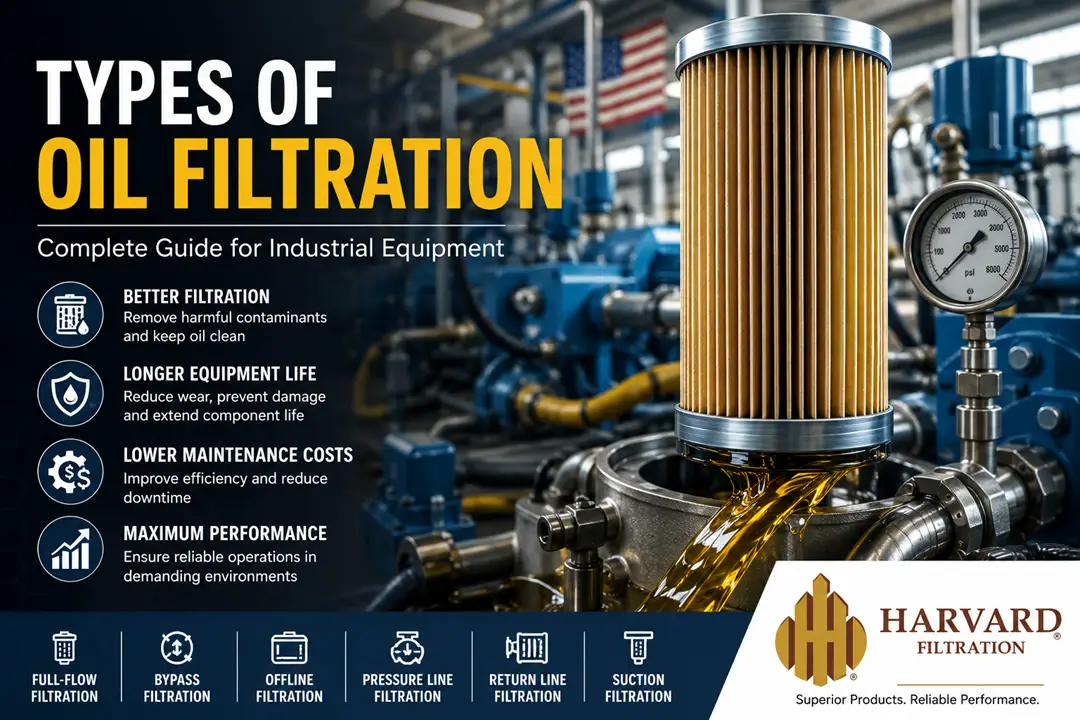
Modern oil filtration systems do much more than keep oil clean—they improve equipment reliability, extend lubricant life, reduce maintenance costs, and support consistent production. Understanding the different filtration methods allows maintenance managers and equipment owners to select the most effective solution for their application. In this guide, we’ll explain how oil filtration works, explore the different types of oil filtration systems, and help you determine which option is best for your industrial equipment.
Why Oil Filtration Matters
Industrial oil performs several important functions beyond lubrication. It helps reduce friction, dissipate heat, prevent corrosion, seal internal components, and transfer hydraulic power throughout the system.
Over time, however, oil becomes contaminated by:
- Dust and airborne particles
- Metal wear debris
- Water contamination
- Carbon deposits
- Oxidation products
- Sludge and varnish
Even microscopic contaminants can damage pumps, valves, cylinders, bearings, and hydraulic motors. Without proper filtration, these particles circulate continuously, accelerating component wear and increasing maintenance expenses.
An effective oil filtration system removes harmful contaminants while maintaining the oil’s performance characteristics, helping businesses across the United States reduce operating costs and improve equipment reliability.
How Oil Filtration Works
Oil filtration is the process of continuously removing contaminants from lubricating oil or hydraulic fluid before they reach sensitive machine components.
The filtration process generally follows these steps:
- Contaminated oil enters the filtration system.
- The oil passes through a specially designed filter media.
- Dirt, metal particles, sludge, and other contaminants become trapped.
- Clean oil returns to the hydraulic or lubrication system.
- The filtration cycle repeats continuously during machine operation.
The effectiveness of a filtration system depends on factors such as filter media quality, micron rating, flow rate, operating pressure, and maintenance practices.
Major Types of Oil Filtration
Different industrial applications require different filtration methods. Selecting the appropriate system depends on equipment size, contamination levels, operating environment, and maintenance goals.
1. Full-Flow Oil Filtration
Full-flow filtration is the most common oil filtration method used in industrial machinery and mobile equipment.
In this system, all circulating oil passes through the filter before reaching the machine’s critical components.
How It Works
A full-flow filter captures larger contaminants while allowing sufficient oil flow to maintain proper lubrication.
Advantages
- Continuous oil cleaning
- Protects pumps and bearings
- Maintains system pressure
- Easy to replace filter elements
- Cost-effective solution
Common Applications
- Hydraulic power units
- Industrial engines
- Manufacturing equipment
- Agricultural machinery
- Construction equipment
2. Bypass Oil Filtration
Bypass filtration provides an additional layer of protection by filtering only a small portion of the oil at a much finer level than full-flow filters.
Instead of filtering all oil simultaneously, a bypass system continuously cleans a small amount of oil and returns it to the reservoir.
Benefits
- Removes ultra-fine particles
- Eliminates water contamination
- Extends oil life
- Reduces equipment wear
- Improves hydraulic efficiency
Because bypass systems remove contaminants that conventional filters cannot capture, they are widely used in industries where equipment reliability is critical.
Industries Using Bypass Filtration
- Mining
- Manufacturing
- Marine
- Power generation
- Oil & Gas
- Heavy construction
3. Offline (Kidney Loop) Filtration
Offline filtration, also known as Kidney Loop Filtration, operates independently from the machine’s primary hydraulic circuit.
Unlike full-flow filters, this system continuously circulates oil through a dedicated filtration unit even when the equipment is not operating.
Advantages
- Continuous contamination removal
- Longer hydraulic oil life
- Lower maintenance costs
- Excellent water removal capability
- Reduced oxidation
Kidney loop systems are particularly valuable for large hydraulic reservoirs where contamination levels must remain consistently low.
4. Pressure Line Filtration
Pressure filters are installed immediately after the hydraulic pump.
Their primary purpose is to protect sensitive downstream components such as:
- Servo valves
- Proportional valves
- Hydraulic motors
- Control valves
Pressure filters are designed to withstand high operating pressures while maintaining excellent filtration efficiency.
Best Applications
- CNC machines
- Injection molding equipment
- Industrial automation
- Hydraulic presses
5. Return Line Filtration
Return line filters clean hydraulic fluid before it returns to the reservoir.
This prevents contaminants generated during machine operation from circulating repeatedly throughout the hydraulic system.
Key Benefits
- Cleaner hydraulic reservoirs
- Reduced contamination levels
- Improved component life
- Lower maintenance costs
- Better overall system cleanliness
Return line filtration is commonly found in:
- Mobile hydraulics
- Industrial hydraulic systems
- Agricultural equipment
- Construction machinery
6. Suction Filtration
Suction filters are installed before the hydraulic pump.
Their role is to stop larger contaminants from entering the pump during oil intake.
Although they provide basic protection, suction filters should not be relied upon as the primary filtration system because overly restrictive filters can reduce pump efficiency.
They are best used alongside pressure and return line filters.
Choosing the Right Oil Filtration System
Selecting the correct filtration system depends on several factors.
Consider:
- Equipment type
- Operating environment
- Hydraulic oil cleanliness requirements
- Flow rate
- Operating pressure
- Micron rating
- Reservoir size
- Maintenance schedule
- Type of contamination
- Equipment criticality
For high-value industrial equipment, combining multiple filtration methods often provides the highest level of protection.
Why Oil Filtration Is Critical for U.S. Industries
Across the United States, industries face increasing demands for productivity, equipment uptime, and reduced maintenance costs. From manufacturing plants in the Midwest to mining operations in the West and construction projects across the South, clean hydraulic oil plays a vital role in maintaining reliable operations.
Proper oil filtration helps businesses:
- Reduce unexpected equipment failures
- Extend hydraulic component life
- Lower maintenance expenses
- Improve energy efficiency
- Increase equipment availability
- Reduce oil disposal costs
- Support preventive maintenance programs
Investing in the right oil filtration system is not only a maintenance decision—it is a long-term strategy for improving operational performance and protecting valuable industrial assets.
Filter Micron Ratings Explained
One of the most important factors when selecting from the different types of oil filtration is the filter’s micron rating. A micron (µm) measures the size of particles the filter can capture. The lower the micron rating, the finer the filtration.
| Micron Rating | Filtration Performance | Typical Applications |
|---|---|---|
| 1–5 Microns | Removes ultra-fine contaminants | Servo valves, precision hydraulic systems |
| 10 Microns | High-efficiency filtration | Industrial hydraulic equipment |
| 25 Microns | General hydraulic protection | Construction and agricultural machinery |
| 40+ Microns | Coarse filtration | Gearboxes and reservoirs |
Choosing the correct micron rating depends on your equipment’s cleanliness requirements, oil type, and operating conditions. Overly fine filters may restrict oil flow if not properly sized, while filters that are too coarse may allow harmful contaminants to circulate.
Comparison of Different Types of Oil Filtration
| Filtration Type | Main Purpose | Best For | Key Benefits |
|---|---|---|---|
| Full-Flow Filtration | Filters all circulating oil | Engines, hydraulic systems | Continuous protection and reliable performance |
| Bypass Filtration | Removes ultra-fine contaminants | Heavy industrial equipment | Extends oil life and improves cleanliness |
| Offline (Kidney Loop) Filtration | Independent continuous filtration | Large reservoirs | Reduces contamination even when equipment is idle |
| Pressure Line Filtration | Protects downstream components | Precision hydraulic systems | Prevents valve and pump damage |
| Return Line Filtration | Cleans oil before entering the reservoir | Mobile and industrial hydraulics | Reduces contamination build-up |
| Suction Filtration | Protects hydraulic pumps | Hydraulic reservoirs | Stops larger particles before they reach the pump |
How to Choose the Right Oil Filtration System
Not every industrial application requires the same filtration solution. Selecting the right system depends on several operating factors.
1. Equipment Type
Different machines have different contamination control requirements. Hydraulic presses, CNC machines, excavators, and manufacturing equipment all require specific filtration solutions.
2. Operating Environment
Machines operating in dusty construction sites, mining facilities, or agricultural environments require more advanced filtration than equipment used in clean manufacturing facilities.
3. Oil Cleanliness Standards
Many industries follow ISO cleanliness codes to maintain hydraulic system performance. Choosing filtration that meets these standards helps improve equipment reliability.
4. Flow Rate
Your filtration system should match the oil flow requirements of your hydraulic system without causing excessive pressure drop.
5. Maintenance Requirements
Consider filters that are easy to replace and require minimal downtime during maintenance.
Common Oil Filtration Mistakes to Avoid
Even high-quality filtration systems can underperform if they are not used correctly. Avoid these common mistakes:
- Using the wrong micron rating
- Delaying filter replacement
- Mixing incompatible filter elements
- Ignoring contamination monitoring
- Using low-quality replacement filters
- Failing to inspect seals and housings
- Overlooking water contamination
- Running equipment with clogged filters
Regular inspection and preventive maintenance significantly improve filtration efficiency and equipment lifespan.
Maintenance Tips for Better Filtration Performance
Proper maintenance helps maximise the effectiveness of your oil filtration system.
Inspect Filters Regularly
Monitor filter condition and replace elements according to manufacturer recommendations or pressure differential indicators.
Keep Oil Clean During Maintenance
Always use clean containers, tools, and transfer equipment when handling hydraulic oil.
Monitor Oil Condition
Routine oil analysis helps detect contamination before it causes equipment damage.
Replace Worn Components
Damaged seals, hoses, or fittings can introduce contaminants into the hydraulic system.
Use High-Quality Filter Elements
Premium filter media provide better contaminant retention, longer service life, and improved system protection.
Benefits of Proper Oil Filtration
Implementing the right oil filtration strategy provides measurable operational benefits.
- Extends hydraulic oil life
- Reduces equipment wear
- Improves machine efficiency
- Minimises unexpected downtime
- Lowers maintenance costs
- Protects pumps, valves, and bearings
- Reduces oil disposal expenses
- Improves equipment reliability
- Supports preventive maintenance programmes
- Maximises return on equipment investment
Frequently Asked Questions
What are the main types of oil filtration?
The most common types of oil filtration include full-flow filtration, bypass filtration, offline (kidney loop) filtration, pressure line filtration, return line filtration, and suction filtration. Each serves a specific purpose depending on the equipment and operating conditions.
Which oil filtration system is best for hydraulic equipment?
Most hydraulic systems benefit from a combination of pressure, return line, and bypass filtration. High-performance equipment may also use offline filtration to maintain exceptional oil cleanliness.
How often should oil filters be replaced?
Replacement intervals depend on equipment usage, operating conditions, contamination levels, and manufacturer recommendations. Regular inspections and oil analysis help determine the optimal replacement schedule.
Why is bypass filtration important?
Bypass filtration removes extremely fine particles and moisture that conventional full-flow filters may not capture. This extends oil life and reduces component wear.
Can clean oil improve equipment life?
Yes. Maintaining clean hydraulic and lubrication oil reduces wear on pumps, bearings, valves, and cylinders, significantly extending equipment life and reducing maintenance costs.
Conclusion
Selecting the right types of oil filtration is essential for protecting industrial equipment, reducing maintenance costs, and improving operational efficiency. Whether your facility relies on full-flow filtration, bypass filtration, offline filtration, or a combination of systems, maintaining clean oil is one of the most effective ways to maximise equipment performance.
For businesses across the United States, investing in high-quality filtration solutions leads to fewer breakdowns, longer equipment life, and improved productivity. Harvard Filtration offers reliable filtration products and contamination control solutions designed to help industrial operations achieve cleaner oil, better performance, and long-term reliability.

