Hydraulic Gear Pump: Working Principle, Types & Applications
April 11, 2026
Hydraulic systems are widely used across industries for efficient power transmission, and one of the most essential components in these systems is the hydraulic gear pump. Known for its durability, simple design, and consistent performance, a gear pump is commonly used for transferring fluids such as oil and lubricants.
What is a Hydraulic Gear Pump?
A hydraulic gear pump is a type of positive displacement pump that uses rotating gears to move fluid from one place to another. It works by trapping a fixed amount of fluid between the gear teeth and forcing it through the pump casing.
In simple terms, a gear pump converts mechanical energy into hydraulic energy by moving fluid under pressure. These pumps are widely used in hydraulic systems, lubrication systems, and oil transfer applications, which is why they are often referred to as gear oil pumps.
Key Features of Hydraulic Gear Pumps:
- Compact and robust design
- High efficiency and reliability
- Suitable for high-viscosity fluids
- Continuous and smooth flow
How Does a Hydraulic Gear Pump Work?
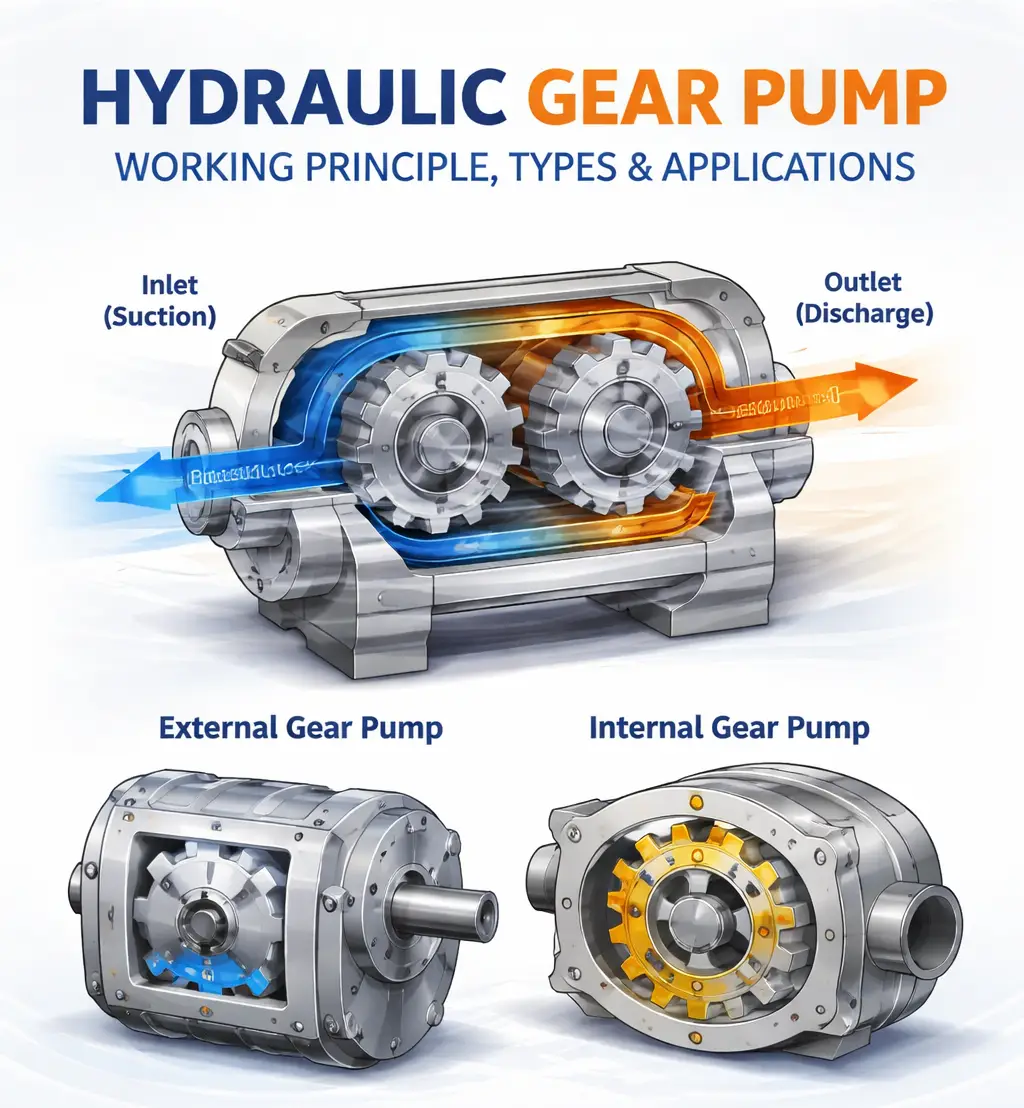
Understanding how does a hydraulic gear pump work is important for selecting the right system for your application.
Working Principle of Gear Pump
A hydraulic gear pump operates on the positive displacement principle, meaning it delivers a constant amount of fluid for each rotation.
Step-by-Step Working Process:
- Suction Phase
When the gears rotate, they create a vacuum at the inlet. This vacuum draws fluid into the pump. - Trapping of Fluid
The fluid gets trapped between the gear teeth and the pump housing. - Transfer of Fluid
As the gears continue rotating, the trapped fluid moves along the outer edges of the gears. - Discharge Phase
When the gears mesh again, the fluid is forced out through the outlet at high pressure.
This continuous cycle ensures a smooth and reliable flow, making gear pumps ideal for hydraulic systems.
Types of Gear Pumps
There are mainly two types of gear pumps used in hydraulic applications:
1. External Gear Pump
An external gear pump consists of two identical gears rotating in opposite directions.
Features:
- Simple construction
- Easy maintenance
- High pressure capability
Applications:
- Hydraulic systems
- Fuel transfer
- Industrial oil circulation
2. Internal Gear Pump
An internal gear pump has one gear inside another, creating a different fluid flow mechanism.
Features:
- Low noise operation
- Smooth flow
- Ideal for viscous fluids
Applications:
- Chemical processing
- Food and beverage industry
- Lubrication systems
Applications of Hydraulic Gear Pumps
Hydraulic gear pumps are widely used across different industries due to their versatility.
Industrial Applications:
- Injection molding machines
- Hydraulic presses
- Machine tools
Construction Equipment:
- Excavators
- Loaders
- Cranes
Automotive and Lubrication:
- Engine oil systems
- Fuel systems
- Transmission systems
Manufacturing Industries:
- Chemical plants
- Food processing units
- Pharmaceutical production
Advantages of Gear Pumps
Using a hydraulic gear pump offers multiple benefits:
- Simple Design: Easy to install and maintain
- Cost-Effective: Affordable compared to other pumps
- Reliable Performance: Works efficiently in tough conditions
- Compact Size: Ideal for limited space applications
- Consistent Flow: Provides steady fluid output
Disadvantages of Gear Pumps
Despite their advantages, gear pumps have some limitations:
- Not suitable for extremely high-pressure systems
- Can produce noise at high speeds
- Wear and tear due to gear contact
- Limited efficiency with low-viscosity fluids
Gear Oil Pump vs Gear Pump
Many users often confuse gear oil pump and hydraulic gear pump.
Key Differences:
- A gear oil pump is mainly used in lubrication systems
- A hydraulic gear pump is used to generate hydraulic pressure
However, both types use the same gear-based working mechanism.
How to Choose the Right Gear Pump
Selecting the correct gear pump is essential for performance and durability.
Important Factors:
- Flow rate requirement
- Pressure rating
- Fluid type and viscosity
- Operating temperature
- Application type
Choosing the right pump ensures better efficiency and longer service life.
Maintenance Tips for Gear Pumps
Proper maintenance is crucial to keep gear pumps functioning efficiently.
Best Practices:
- Regularly inspect for leaks and wear
- Use clean and filtered oil
- Check seals and replace if damaged
- Avoid running the pump dry
- Monitor noise and vibration levels
Routine maintenance helps reduce downtime and increases pump lifespan.
Common Problems in Gear Pumps
1. Low Pressure
- Cause: Internal leakage or worn gears
- Solution: Replace damaged components
2. Excessive Noise
- Cause: Air entering the system
- Solution: Check seals and connections
3. Overheating
- Cause: High load or poor lubrication
- Solution: Ensure proper oil flow
Future Trends in Hydraulic Gear Pumps
Modern gear pumps are evolving with advanced technology to improve efficiency and durability. Some trends include:
- Energy-efficient designs
- Smart monitoring systems
- Advanced materials for longer life
- Reduced noise and vibration
These innovations are making hydraulic gear pumps more reliable and suitable for modern industrial needs.
Conclusion
A hydraulic gear pump is an essential component in fluid power systems, widely used for its efficiency, reliability, and simplicity. Understanding what is a hydraulic gear pump and how does a hydraulic gear pump work helps industries choose the right equipment for their operations. From industrial machinery to lubrication systems, gear pumps continue to play a vital role in ensuring smooth and efficient performance.
For high-quality filtration solutions that enhance the performance and lifespan of your hydraulic systems, Harvard Filtration offers reliable and industry-leading products designed to meet modern industrial requirements.
Also Read: Understanding the Working of Hydraulic Machines
FAQs
1. What is a hydraulic gear pump?
A hydraulic gear pump is a positive displacement pump that uses rotating gears to move fluid. It is commonly used in hydraulic systems for transferring oil and generating pressure.
2. How does a hydraulic gear pump work?
A hydraulic gear pump works by trapping fluid between gear teeth and the pump casing. As the gears rotate, the fluid is carried from the inlet to the outlet and discharged under pressure.
3. What are the types of gear pumps?
The two main types of gear pumps are external gear pumps and internal gear pumps. External gear pumps are simple and widely used, while internal gear pumps are quieter and suitable for viscous fluids.
4. Where are gear pumps used?
Gear pumps are used in hydraulic systems, lubrication systems, chemical industries, food processing, automotive applications, and oil transfer operations.
5. What is the difference between a gear oil pump and a hydraulic gear pump?
A gear oil pump is mainly used for lubrication purposes, while a hydraulic gear pump is used to generate hydraulic pressure in systems.
Read Also Blog:
Basics of Hydraulic Cylinders: Working, Types & Applications
The Complete Guide to Hydraulic Systems

