Machinery Lubrication Solutions | Harvard Filtration
November 21, 2022
Industrial machinery is one of the most valuable assets in manufacturing plants, construction sites, mining operations, power generation facilities, and agricultural businesses. Whether it’s a hydraulic excavator, CNC machine, industrial compressor, or conveyor system, every machine relies on moving components that generate friction during operation. Without proper lubrication, these components wear out quickly, leading to increased maintenance costs, unexpected breakdowns, and costly production delays. Machinery lubrication is the foundation of an effective maintenance strategy. By applying the right lubricant at the right time and in the correct quantity, businesses can minimise friction, reduce heat, protect critical components, and extend equipment life. However, lubrication alone is not enough. Lubricants can become contaminated with dust, water, metal particles, and oxidation by-products, reducing their effectiveness and increasing the risk of equipment failure. This is why combining machinery lubrication with advanced oil filtration systems is essential for maintaining reliable industrial operations.
Across the United States and Canada, industries are increasingly investing in preventive maintenance and contamination control to improve productivity and reduce downtime. From manufacturing and mining to agriculture and transportation, effective machinery lubrication helps organisations maximise equipment performance while lowering operating costs.
What Is Machinery Lubrication?
Machinery lubrication is the process of applying oil, grease, or specialised lubricants to moving machine components to reduce friction and wear between surfaces. It creates a protective film that separates metal parts, preventing direct contact and minimising damage during operation.
A properly lubricated machine operates more efficiently because lubrication helps to:
- Reduce friction between moving parts
- Minimise component wear
- Prevent overheating
- Protect against corrosion and rust
- Improve energy efficiency
- Extend equipment service life
- Reduce maintenance costs
- Increase operational reliability
Whether operating heavy construction equipment, hydraulic systems, manufacturing machinery, or industrial gearboxes, proper lubrication ensures consistent and dependable performance.
Why Machinery Lubrication Matters
Lubrication plays a much larger role than simply reducing friction. It directly impacts equipment reliability, production efficiency, and maintenance budgets.
Reduces Friction and Wear
Every moving machine component experiences friction. Over time, excessive friction damages bearings, gears, shafts, seals, and hydraulic components. Lubricants create a protective layer that reduces metal-to-metal contact, significantly lowering wear rates.
Controls Operating Temperature
Mechanical friction generates heat. Excessive temperatures accelerate lubricant degradation and can damage sensitive machine components. Quality lubricants help transfer heat away from moving parts, maintaining safe operating temperatures.
Protects Against Corrosion
Industrial equipment often operates in harsh environments where moisture, humidity, chemicals, and airborne contaminants are present. Lubricants form a protective barrier that helps prevent rust and corrosion, extending component life.
Improves Energy Efficiency
Machines with properly lubricated components require less energy to overcome friction. Reduced resistance allows motors and hydraulic systems to operate more efficiently, lowering energy consumption and improving overall productivity.
Minimises Downtime
Unexpected equipment failures can interrupt production schedules and increase maintenance expenses. Routine lubrication, combined with contamination control, reduces breakdowns and keeps machinery operating reliably.
How Machinery Lubrication Works
Lubrication works by forming a thin protective film between two moving surfaces. Instead of metal rubbing directly against metal, the lubricant absorbs friction and distributes loads more evenly.
An effective lubrication programme also helps:
- Carry away contaminants
- Reduce vibration
- Cushion mechanical shock
- Improve sealing performance
- Prevent oxidation
When lubricants remain clean and properly maintained, machinery performs more efficiently and experiences fewer failures.
Types of Machinery Lubricants
Different industrial applications require different lubricant types. Selecting the correct lubricant depends on operating conditions, temperature, load, and equipment design.
1. Mineral Oil Lubricants
Mineral oils are petroleum-based lubricants widely used in industrial machinery due to their affordability and versatility.
Common applications include:
- Hydraulic systems
- Industrial gearboxes
- Compressors
- Pumps
Advantages
- Cost-effective
- Widely available
- Suitable for standard operating conditions
2. Synthetic Lubricants
Synthetic lubricants are engineered for demanding operating environments where high temperatures, heavy loads, or extended service intervals are common.
Applications
- High-speed machinery
- Aerospace equipment
- Heavy industrial operations
- Extreme temperature environments
Benefits
- Longer service life
- Better oxidation resistance
- Improved thermal stability
- Enhanced equipment protection
3. Grease Lubricants
Grease combines oil with thickening agents, making it ideal for components where liquid oil cannot remain in place.
Common uses include:
- Bearings
- Electric motors
- Construction equipment
- Agricultural machinery
Advantages
- Excellent adhesion
- Water resistance
- Reduced leakage
- Longer lubrication intervals
4. Solid Lubricants
Solid lubricants are used when liquid lubricants are unsuitable, particularly in extreme operating conditions.
Examples include:
- Graphite
- Molybdenum disulphide
- PTFE (Teflon)
These lubricants perform well under high temperatures, heavy loads, and dusty environments.
Types of Machinery Lubrication
Dry Lubrication
Dry lubrication uses solid materials instead of liquid oils or greases. It is commonly used where high temperatures or contamination make liquid lubricants impractical.
Benefits
- Performs well in extreme heat
- No oil leakage
- Suitable for dusty environments
- Handles heavy loads
Wet Lubrication
Wet lubrication uses liquid oils or greases to form a protective layer between moving machine components.
It is the most common lubrication method used across manufacturing facilities in the United States and Canada because it provides excellent cooling, corrosion protection, and wear resistance.
Machinery Lubrication Methods
Different machines require different lubrication techniques depending on their design and operating conditions.
Splash Lubrication
Moving components dip into an oil reservoir, splashing lubricant onto surrounding parts.
Best for
- Gearboxes
- Small industrial machines
Pressure Lubrication
A pump circulates lubricant under pressure throughout the machine.
Best for
- Engines
- Hydraulic systems
- Heavy industrial equipment
Grease Lubrication
Grease is applied directly to bearings, joints, and moving components.
Best for
- Bearings
- Construction machinery
- Agricultural equipment
Mist Lubrication
A fine mist of lubricant is distributed throughout enclosed machinery.
Best for
- High-speed rotating equipment
- Industrial compressors
- Turbines
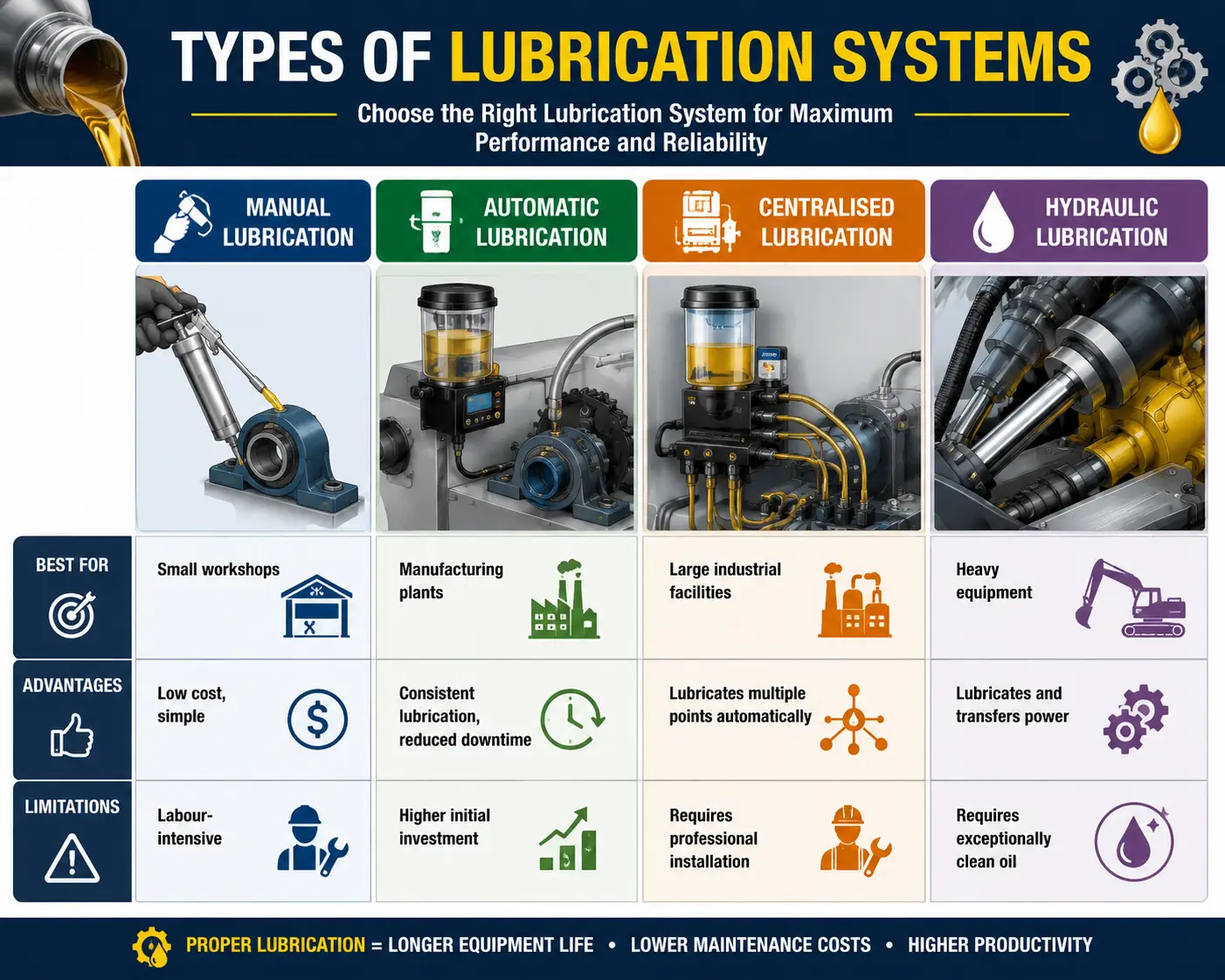
Machinery Lubrication Systems
A well-designed machinery lubrication system delivers the right amount of lubricant to the right component at the right time. Choosing the correct lubrication system improves equipment reliability, reduces maintenance costs, and extends machinery life.
1. Manual Lubrication
Manual lubrication involves technicians applying oil or grease using grease guns, oil cans, or handheld pumps.
Advantages
- Low initial investment
- Suitable for small workshops
- Easy to implement
Limitations
- Depends on operator consistency
- Risk of over- or under-lubrication
- Labour-intensive for large facilities
Manual lubrication is best suited for smaller operations with fewer lubrication points.
2. Automatic Lubrication Systems
Automatic lubrication systems dispense precise amounts of lubricant at scheduled intervals without interrupting machine operation.
Benefits
- Reduces human error
- Ensures consistent lubrication
- Lowers maintenance costs
- Minimises equipment downtime
- Improves worker safety
Automatic systems are commonly used in manufacturing plants, mining operations, food processing facilities, and heavy construction equipment.
3. Centralised Lubrication Systems
A centralised lubrication system supplies lubricant from one reservoir to multiple lubrication points simultaneously.
Advantages
- Lubricates multiple components automatically
- Saves maintenance time
- Reduces lubricant waste
- Improves equipment reliability
- Ideal for large industrial facilities
Industries using centralised systems include:
- Steel manufacturing
- Paper mills
- Cement plants
- Automotive manufacturing
- Mining
4. Hydraulic Lubrication Systems
Hydraulic systems rely on clean hydraulic oil for both lubrication and power transmission.
Hyd oil performs several critical functions:
- Lubricates moving components
- Transfers hydraulic power
- Removes heat
- Prevents corrosion
- Protects pumps and valves
Because hydraulic systems have extremely tight tolerances, even microscopic contamination can lead to premature wear and costly failures.
The Biggest Threat to Machinery Lubrication: Contamination
Applying high-quality lubricants alone is not enough. Once contaminants enter the lubricant, its protective properties begin to deteriorate.
Common contaminants include:
- Dust
- Dirt
- Sand
- Water
- Metal particles
- Sludge
- Oxidation by-products
- Air bubbles
These contaminants accelerate wear, reduce lubrication efficiency, clog filters, and shorten equipment life.
Without effective contamination control, even premium lubricants cannot provide optimal protection.
Why Oil Filtration Is Essential for Machinery Lubrication
Oil filtration plays a critical role in maintaining lubricant quality by removing harmful contaminants before they damage machine components.
An effective filtration system helps to:
- Remove abrasive particles
- Eliminate water contamination
- Reduce sludge formation
- Improve oil cleanliness
- Extend lubricant service life
- Protect hydraulic components
- Reduce unplanned maintenance
Clean oil significantly improves equipment performance and reliability across industrial applications.
Benefits of High-Quality Oil Filtration
Integrating advanced filtration into your lubrication programme offers several advantages.
Longer Equipment Life
Clean lubricants reduce wear on bearings, gears, pumps, cylinders, and valves, helping equipment last longer.
Lower Maintenance Costs
Contamination is one of the leading causes of equipment failure. Effective filtration reduces component replacement and repair costs.
Reduced Downtime
Unexpected machine failures disrupt production schedules. Clean oil helps minimise breakdowns and increases equipment availability.
Improved Energy Efficiency
Machines operating with clean lubricants experience less friction, allowing motors and hydraulic systems to consume less energy.
Extended Oil Drain Intervals
Removing contaminants slows lubricant degradation, allowing oils to remain in service longer while maintaining performance.
Best Practices for Machinery Lubrication
An effective lubrication programme requires more than simply adding oil or grease. Following industry best practices helps maximise equipment reliability.
Select the Correct Lubricant
Choose lubricants based on:
- Equipment manufacturer recommendations
- Operating temperature
- Load conditions
- Speed
- Environmental conditions
Avoid Over-Lubrication
Too much lubricant can be just as harmful as too little. Excess grease increases heat, damages seals, and wastes lubricant.
Follow Scheduled Maintenance
Develop lubrication schedules based on equipment operating hours rather than waiting for signs of failure.
Routine maintenance should include:
- Lubricant replacement
- Filter replacement
- Oil sampling
- Visual inspections
- Leak detection
Keep Lubricants Clean
Always store lubricants in sealed containers and use clean transfer equipment to prevent contamination before application.
Monitor Lubricant Condition
Routine oil analysis provides valuable information about:
- Contamination levels
- Moisture content
- Metal wear particles
- Viscosity
- Oxidation
This allows maintenance teams to identify potential problems before equipment failures occur.
Common Machinery Lubrication Mistakes
Many equipment failures result from avoidable lubrication errors.
Common mistakes include:
- Using the wrong lubricant
- Mixing different lubricant types
- Missing lubrication intervals
- Ignoring contamination
- Over-greasing bearings
- Reusing contaminated oil
- Delaying filter replacement
Avoiding these issues helps improve equipment reliability and reduces operating costs.
Industries That Depend on Machinery Lubrication
Proper lubrication is essential across nearly every industrial sector.
Manufacturing
- CNC machines
- Injection moulding equipment
- Conveyor systems
- Industrial presses
Reliable lubrication improves production efficiency and reduces downtime.
Construction
Heavy equipment such as:
- Excavators
- Bulldozers
- Wheel loaders
- Cranes
requires continuous lubrication to withstand demanding operating conditions.
Mining
Mining equipment operates in dusty and abrasive environments where contamination control is critical.
Examples include:
- Haul trucks
- Crushers
- Drilling equipment
- Conveyors
Agriculture
Agricultural machinery requires dependable lubrication to maintain productivity during planting and harvesting seasons.
Examples include:
- Tractors
- Harvesters
- Balers
- Irrigation pumps
Energy and Power Generation
Power plants rely on clean lubrication systems for:
- Turbines
- Compressors
- Pumps
- Generators
Contamination control is essential for maintaining continuous operation.
Transportation
Commercial fleets and railway equipment use advanced lubrication systems to maximise reliability and reduce maintenance costs.
Machinery Lubrication Maintenance Checklist
A proactive lubrication programme is one of the most cost-effective ways to improve equipment reliability and reduce maintenance costs. Use the following checklist to keep your machinery operating at peak performance.
Daily Checklist
- Inspect lubricant levels.
- Check for visible oil or grease leaks.
- Listen for unusual machine noises.
- Monitor operating temperatures.
- Look for excessive vibration.
Weekly Checklist
- Inspect lubrication points for blockages.
- Clean grease fittings and oil ports.
- Check filter condition.
- Verify automatic lubrication system operation.
- Remove dirt and debris around lubrication points.
Monthly Checklist
- Replace clogged or worn filters.
- Inspect hoses, pumps, and reservoirs.
- Perform oil sampling if required.
- Check lubricant contamination levels.
- Review maintenance records for recurring issues.
Quarterly Checklist
- Conduct a complete lubrication system inspection.
- Flush contaminated lubricants when necessary.
- Replace damaged seals or fittings.
- Verify oil cleanliness levels.
- Review lubrication schedules and adjust if operating conditions have changed.
Warning Signs of Poor Machinery Lubrication
Identifying lubrication problems early can prevent expensive equipment failures.
Watch for these common warning signs:
- Excessive bearing noise
- Increased machine vibration
- Rising operating temperatures
- Oil leaks
- Metal particles in lubricant
- Slow hydraulic response
- Reduced equipment efficiency
- Burnt or dark lubricant
- Frequent bearing failures
- Increased energy consumption
If any of these issues occur, inspect both the lubricant and the filtration system immediately.
Machinery Lubrication System Comparison
Machinery Lubrication Best Practices
To maximise equipment performance, follow these industry-recommended practices:
Use Manufacturer-Recommended Lubricants
Always select lubricants that meet the equipment manufacturer’s viscosity and performance specifications.
Maintain Clean Lubricants
Store lubricants in clean, sealed containers to prevent contamination before use.
Replace Filters Regularly
Dirty filters allow contaminants to circulate through the system, accelerating wear and reducing lubricant effectiveness.
Perform Routine Oil Analysis
Oil analysis helps detect:
- Water contamination
- Metal wear particles
- Oxidation
- Viscosity changes
- Additive depletion
Monitoring oil condition allows maintenance teams to address problems before they lead to equipment failure.
Train Maintenance Personnel
Proper lubrication techniques reduce human error and ensure consistent maintenance practices across the facility.
Why Oil Filtration Is the Key to Successful Machinery Lubrication
Even the highest-quality lubricant cannot protect machinery if it becomes contaminated. Dust, moisture, sludge, and microscopic metal particles gradually reduce lubricant performance, increase wear, and shorten equipment life.
A high-quality oil filtration system continuously removes harmful contaminants, helping to:
- Extend lubricant service life
- Reduce component wear
- Improve hydraulic system performance
- Lower maintenance costs
- Reduce unplanned downtime
- Increase equipment reliability
For industries operating in demanding environments such as manufacturing, mining, construction, agriculture, and energy, effective filtration is a critical part of every lubrication programme.
Why Industries Across the USA & Canada Trust Harvard Filtration
Effective machinery lubrication starts with clean oil. Harvard Filtration provides advanced filtration solutions designed to help businesses maintain cleaner lubricants, protect valuable equipment, and improve operational efficiency.
Our solutions include:
- Hydraulic Filtration Systems
- Oil Filtration Systems
- Replacement Hydraulic Filter Elements
- Bypass Filtration Systems
- Portable Filtration Units
- Industrial Filter Elements
Whether you operate manufacturing facilities, construction fleets, mining equipment, or hydraulic systems, our filtration solutions help reduce contamination, extend equipment life, and minimise costly downtime.
Conclusion
Machinery lubrication is much more than applying oil or grease to moving parts—it is a critical component of a comprehensive maintenance strategy. Proper lubrication reduces friction, minimises wear, controls operating temperatures, protects against corrosion, and improves equipment efficiency. However, lubrication is only effective when the lubricant remains clean.
By combining high-quality lubricants with advanced oil filtration and contamination control, businesses across the United States and Canada can significantly improve machinery reliability, reduce maintenance costs, and extend equipment service life.
If you’re looking to optimise your machinery lubrication programme, Harvard Filtration offers reliable filtration solutions tailored to meet the demands of modern industrial operations. Contact our team today to discover how the right filtration system can help protect your equipment and maximise productivity.
Frequently Asked Questions
1. What is machinery lubrication?
Machinery lubrication is the process of applying oil, grease, or other lubricants to moving machine components to reduce friction, minimise wear, and improve equipment performance.
2. Why is machinery lubrication important?
Proper lubrication prevents premature wear, reduces heat generation, improves energy efficiency, protects against corrosion, and extends machinery life.
3. What are the different types of machinery lubrication?
The main types include dry lubrication, wet lubrication, grease lubrication, pressure lubrication, splash lubrication, and automatic lubrication systems.
4. How often should industrial machinery be lubricated?
Lubrication intervals depend on the equipment type, operating conditions, and manufacturer recommendations. Critical machinery may require daily inspections and scheduled lubrication based on operating hours.
5. What causes lubricant contamination?
Common contaminants include dust, dirt, water, metal particles, sludge, oxidation by-products, and airborne debris.

